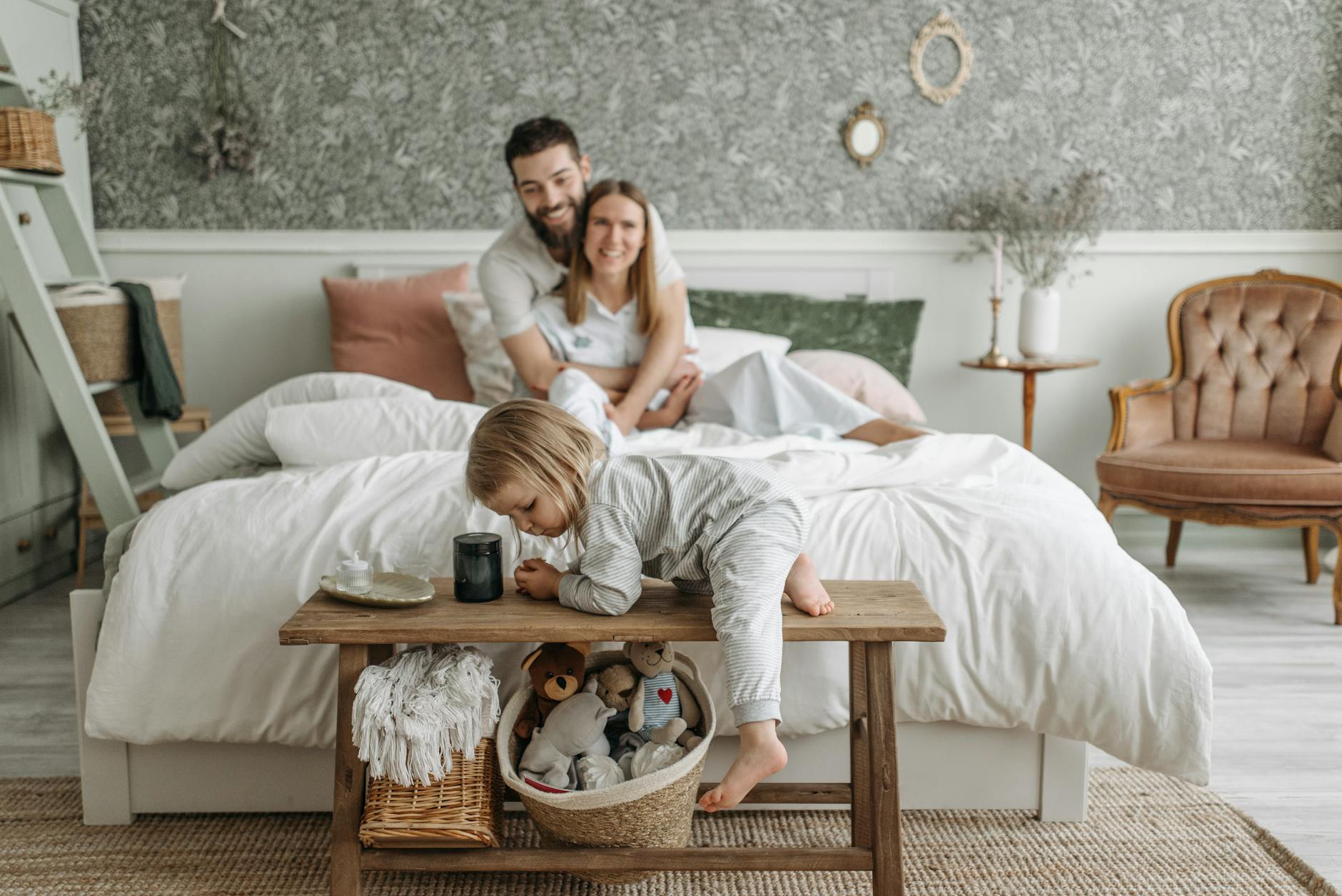
Our Morning Rhythm: What Actually Works (And What We Gave Up On)
We tried the 5 AM miracle routine, the Waldorf morning circle, and the color-coded schedule. Here is what we actually do now, and why simpler won.
Every January, without fail, the homeschool internet fills up with beautiful morning routine posts. Color-coded block schedules printed on cardstock. Morning baskets overflowing with art supplies, nature journals, a poetry book, and seasonal nature items. Someone's 5 AM wake-up routine, told in a way that makes it sound genuinely spiritual.
And every January, we would look at these posts and feel vaguely inadequate about the fact that our morning routine consisted of someone eating cereal and someone else arguing about a sibling and nobody finding their pencils.
We tried a lot of those things. Here is what actually happened.
What We Tried and Abandoned
The 5 AM miracle routine. We read about getting up before the kids to have quiet time, exercise, and planning before the house woke up. We tried it for about three days. By day three, we were so tired by 2 PM that school was worse, not better. Some people are wired to be early risers. We are not those people, and trying to become them was a form of self-betrayal dressed up as discipline.
The elaborate morning basket. The morning basket concept is lovely in theory: a beautiful collection of poetry, nature study, art prints, a foreign language CD, handicrafts. In our house, it became a thing that needed to be assembled every night and then argued over every morning. Our kids were not charmed by the art prints. One of them used the nature journal to draw battle scenes. We loved the idea of the morning basket more than we loved the actual morning basket.
The color-coded schedule. We made a beautiful Canva document once. Teal blocks for school subjects, green blocks for outdoor time, purple for quiet reading. We laminated it. It lasted one week before life made it useless. The problem with a color-coded schedule is that it assumes every day is the same, and no day is ever exactly the same.
The Waldorf morning circle. We loved this idea: gathering to recite a verse, do some movement, sing together. It was genuinely sweet when it worked. When it didn't work, which was most mornings, it felt like herding wet cats while reciting poetry at them. Our kids were not in a circle mood at 8:30 AM on a Wednesday.
None of these things were bad ideas. They just weren't our ideas, for our kids, in our actual life.
The Three Anchors That Held
After enough trial and error, we arrived at three things that actually work. They're embarrassingly simple. That's probably why they work.
Breakfast together.
We eat together every morning without devices, without school, without agenda. Sometimes this is 20 minutes and sometimes it's 45 minutes because a conversation gets interesting. We talk about whatever: what someone dreamed, what's in the news, what somebody is excited or stressed about. This is not school. It is connection, and it turns out connection is what makes everything else go better.
Read-aloud after breakfast.
Right after we clear the table, we read together. Not forever, usually 20 to 30 minutes. We read whatever is interesting: a chapter of a novel, a section of a history narrative, a picture book even though the kids are older (they still love them). We don't summarize or quiz or make it educational. We just read together and let the content do its work.
This single habit has done more for our kids' vocabulary, comprehension, and love of learning than almost anything else we've done. It costs nothing. It requires no prep. It builds the habit of sitting still and listening, which turns out to be a skill that matters for everything.
One focused work block before lunch.
After the read-aloud, we do school. One block, usually 90 minutes to two hours, where everyone works on their current subjects. Math, language arts, whatever is on the current rotation. We don't try to do everything every day. We aim for deep work on two or three things and then we stop.
Before lunch. That's the constraint that makes it work. If we don't finish before lunch, we stop anyway. There is something clarifying about a deadline that actually lands.
When the Rhythm Breaks
And it does break. Often.
Travel disrupts it. Sick days flatten it entirely. Some mornings someone is just too sad or too excited or too something to do the normal thing, and we don't force it. Some months are heavier than others and the work block shrinks to almost nothing.
We don't try to maintain the rhythm perfectly. We try to return to it. That's the difference.
A rhythm is not a schedule. A schedule is what you're supposed to do. A rhythm is what you naturally return to. When a song goes off-beat, you don't throw out the whole song; you find the beat again.
When our rhythm breaks, we come back to the anchors: breakfast together, read-aloud, one work block. If we can do all three, it's a good day. If we can only do one, that one still matters.
Build the Rhythm That Feels Like Yours
The most important thing we've learned about morning rhythms is that the internet's version is not our version. Your family's ideal morning is not going to look like any photo on Pinterest.
What are the things your family genuinely does well in the morning? What time do your kids naturally wake up? What kills the mood before school even starts? What one habit, if you did it consistently, would make everything else flow better?
Start there. Build around that. Drop everything that creates friction without corresponding reward.
Simpler than you think is probably right. And the rhythm that feels like yours, the one that fits the actual people in your actual house, is the one that will last.
The morning basket is the specific practice we anchor every morning to. And if the broader shape of the day needs adjusting, creating a homeschool rhythm covers how we think about the whole structure.
Written by
The High Vibe Homeschool Team
We are a homeschool family that has been doing this for seven years across three kids. We write about what we have actually tried, what failed, what surprised us, and what we would do again. No credentials. Just lived experience.
ENJOYED THIS ARTICLE?
Get more like it every week
Real homeschool life, in your inbox.
Keep Reading
More in Daily Life
 Daily Life
How to End the Homeschool Year Well
The end of the homeschool year deserves more than quietly stopping. Here is how we close out the year intentionally — what we review, what we celebrate, and how we rest well before the next one begins.
 Daily Life
Homeschool Summer: How to Rest Without Losing Everything You Built
Summer in a homeschool is not the same as summer vacation. Here is how we structure ours — enough rest to restore everyone, enough continuity to make September feel like a continuation rather than a restart.
 Daily Life
Outdoor Science: The Homeschool Advantage You're Not Using
Most science curricula are indoor, textbook-based affairs. The outdoor world offers something they cannot: real science, happening in real time, available every day.